
WHAT'S INSIDE
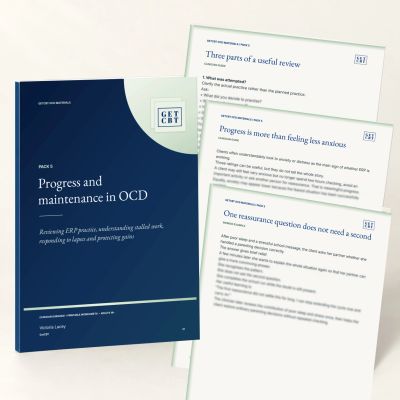
Reviewing ERP practice
Look beyond whether homework was simply “done” and examine what was approached, what remained active and what the client actually learned.
Measuring meaningful progress
Track changes in rituals, avoidance, response prevention, functioning and behavioural freedom rather than relying on distress ratings alone.
Understanding stalled treatment
Step back and inspect formulation, task design, response prevention, access, context and therapeutic process before simply increasing exposure difficulty.
Responding to lapses
Treat lapses as useful clinical information and support a purposeful return to the treatment plan without blame or overanalysis.
Planning maintenance
Help clients recognise returns to the old OCD process, retrieve useful learning and continue approaching ordinary life without constant symptom surveillance.
Ending, boosters & further review
Clarify when treatment can step down, when a booster may help and when changes in presentation require broader clinical reassessment.
LOOK INSIDE

CLINICAL GUIDANCE
CLIENT-READY WORKSHEETS
CLINICAL GUIDANCE
Practical support for interpreting progress, stalled ERP and setbacks without reducing review to scores or adherence.
PRACTICAL TOOLS
CLIENT-READY WORKSHEETS
CLINICAL GUIDANCE
Structured review, troubleshooting and maintenance resources designed to support the next useful clinical decision.
CLIENT-READY WORKSHEETS
CLIENT-READY WORKSHEETS
CLIENT-READY WORKSHEETS
Collaborative tools for reviewing progress, responding to lapses and developing a realistic maintenance plan.
looking for the complete OCD Assessment & ERP Collection?
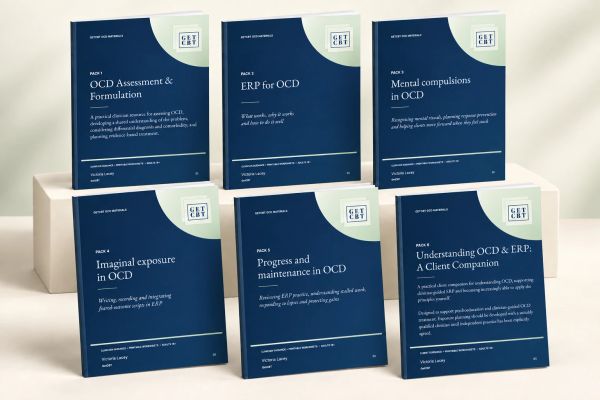
£79.99 ALL SIX PACKS — SAVE £24.95
A complete six-pack clinical resource for assessing OCD, planning and delivering ERP, addressing mental compulsions and imaginal exposure, reviewing progress and supporting clients between sessions.

Thinking about starting therapy in the New Year?
New Monday CBT appointments available from 11 January, in Bromborough or online.
5 weekly spaces remaining